Buy lqx.eu ?
We are moving the project
lqx.eu .
Are you interested in purchasing the domain
lqx.eu ?
domain@kv-gmbh.de · 0541-91531010
Buy lqx.eu ?
Which lemma can I use to prove the pumping lemma?
To prove the pumping lemma for regular languages, you can use the lemma itself. The pumping lemma states that for any regular language L, there exists a constant p (the pumping length) such that any string s in L with length at least p can be divided into three parts, s = xyz, satisfying certain conditions. By using the pumping lemma, you can show that for any regular language, there exists a pumping length p such that any string in the language can be pumped to generate an infinite number of strings also in the language. **
How to apply the Pumping Lemma?
To apply the Pumping Lemma, you first assume that a language L is regular. Then, you choose a suitable string w from L that satisfies the conditions of the Pumping Lemma. Next, you decompose w into three parts, u, v, and x, such that w = uvx and |v| > 0 and |uv| ≤ p, where p is the pumping length given by the Pumping Lemma. Finally, you show that for any i ≥ 0, the string uv^ix is not in L, thus leading to a contradiction and proving that L is not regular. **


Similar search terms for Lemma
Top-Angebote
Products related to Lemma:
-
Sesderma Reti Age 5 Liposomal Serum Anti-Aging Innovation 30mLA facial serum for wrinkles and signs of ageing. Reduces wrinkles and fine lines. Hydrates and strengthens barrier. Restores youthful radiance. 5-Retinoid System: smooths wrinkles, accelerates renewal, and boosts collagen. Biomimetic Peptides: fill expression lines by stimulating collagen synthesis.53,26 £*Shipping: 5,22 £Secure redirect to the provider
-
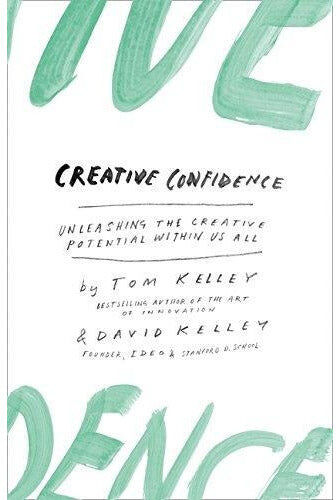
HARPERCOLLINS Creative Confidence by Tom & David Kelley – Unleashing Your Creative Potential & Innovation MindsetA powerful and inspiring book from the founders of IDEO, the award-winning design firm, on unleashing the creativity that lies within each and every one of us. Too often, companies and individuals assume that creativity and innovation are the domain of the ‘creative types’. But two of the foremost experts in innovation, design and creativity on the planet show us that each and every one of us is creative. In an entertaining and inspiring narrative that draws on countless stories from their work at IDEO, and with many of the world's top companies and design firms, David and Tom Kelley identify the principles and strategies that will allow us to tap into our creative potential in our work lives, and in our personal lives, allow us to think outside the box in terms of how we approach and solve problems. ‘Creative Confidence’ is a book that will help each of us be more productive and successful in our lives and in our careers.4,95 £*Shipping: 1,99 £Secure redirect to the provider
-
Innovation: Fourth Edition Board Game - 2-4 Players - New Edition with Age 11 CardsStrategic card game for 2 to 4 players. Build a civilization through ideas, inventions, and cultural advances. Includes updated artwork, streamlined rules, and new expansion The Unseen.17,58 £*Shipping: 3,95 £Secure redirect to the provider
-
Ravensburger Harry Potter Memory Game Mini Edition - Compact Design - Ravensburger QualityBring magic to family nights with the Ravensburger Harry Potter Memory Game Mini Edition. This compact, collectible challenge features vibrant, durable cards printed with iconic moments and characters from the wizarding world. Designed for easy handling by little hands and satisfying shuffles for adults, the mini edition upholds Ravensburger quality with premium materials and precise cuts. Players flip two cards, seeking matching Hogwarts scenes, which strengthens memory, focus, and turn-taking. Perfect for family nights, this game is ideal for gifting and great for travel, suitable for kids and grown-ups alike. The compact design makes it a cozy, portable activity that travels easily.4,82 £*Shipping: 3,95 £Secure redirect to the provider



-
How do you apply the Pumping Lemma?
The Pumping Lemma is applied to prove that a language is not regular. To apply the Pumping Lemma, you assume that the language in question is regular and then choose a suitable string from the language. Next, you decompose the string into three parts as per the conditions of the Pumping Lemma. By selecting a specific pumping length, you show that no matter how the string is pumped, it will eventually generate a string that is not in the language, thus contradicting the assumption that the language is regular. **
-
What is the question about the Pumping Lemma?
The question about the Pumping Lemma typically asks students to use the lemma to prove that a given language is not regular. Students are usually asked to choose a specific string from the language, decompose it into three parts as per the lemma's requirements, and then show that no matter how the string is pumped, it will not remain in the language. This demonstrates that the language does not satisfy the conditions of the Pumping Lemma and therefore cannot be regular. **
-
What is the Pumping Lemma for regular languages?
The Pumping Lemma for regular languages is a fundamental result in theoretical computer science that provides a necessary condition for a language to be regular. It states that for any regular language L, there exists a constant p (the pumping length) such that any string s in L of length at least p can be split into three substrings, s = xyz, satisfying three conditions: 1) |xy| ≤ p, 2) |y| > 0, and 3) for all i ≥ 0, the string xy^iz is also in L. This lemma is often used to prove that certain languages are not regular by showing that they do not satisfy the conditions of the Pumping Lemma. **
-
What does the Pumping Lemma state for regular languages?
The Pumping Lemma for regular languages states that for any regular language L, there exists a pumping length p such that any string s in L with length at least p can be divided into three parts, u, v, and w, such that s = uvw, satisfying three conditions: 1) |uv| ≤ p, 2) |v| > 0, and 3) for all i ≥ 0, the string uv^iw is also in L. This lemma is used to prove that certain languages are not regular by showing that they do not satisfy the conditions of the Pumping Lemma. **

How does the pumping lemma for regular languages work?
The pumping lemma for regular languages states that for any regular language L, there exists a constant p such that any string s in L with length at least p can be divided into three parts, s = xyz, satisfying the following conditions: 1. |xy| ≤ p 2. |y| > 0 3. For all i ≥ 0, the string xy^iz is also in L. This lemma is used to prove that a language is not regular by assuming it is regular and then finding a string that violates the conditions of the pumping lemma. If no such string can be found, then the language may be regular. **
Why can't it be pumped with the pumping lemma?
The pumping lemma is a tool used to prove that a language is not regular. If a language cannot be pumped with the pumping lemma, it means that the language does not satisfy the conditions required for it to be regular. This could be due to the language having a non-regular structure or containing patterns that cannot be captured by a finite automaton. In other words, the language may have properties that cannot be replicated by the finite memory of a regular language. **
Top-Angebote
Products related to Lemma:
-
SAFAVIEH Lemma Window Polyester Home Accent, Modern Sofa or Bed Accent"Lemma Window Home Accent: sheer polyester fabric and grommet top header The Lemma Window Home Accent is a modern home accent. This polyester home accent measures 51"" W x 84"" L. Available in 2 colorways: Grey and Lavander."21,52 $*Shipping: 0,00 $Secure redirect to the provider
-
HarperCollins Creative Confidence by David Kelley & Tom Kelley - IDEO Design Thinking Guide - Paperback - Business & Innovation Non Fiction BookDevelop your creative potential with this paperback edition of 'Creative Confidence' by David Kelley. The book, published by HarperCollins, argues that creativity is a skill anyone can build, not a rare gift reserved for a few. Drawing on decades of experience helping companies innovate, the authors share practical tools for turning doubt into confident action. This book sets out to demolish the myth that creativity belongs only to 'creative types' and offers real-world advice for anyone looking to boost their creative skills.4,99 £*Shipping: 2,99 £Secure redirect to the provider
-
Sesderma Reti Age 5 Liposomal Serum Anti-Aging Innovation 30mLA facial serum for wrinkles and signs of ageing. Reduces wrinkles and fine lines. Hydrates and strengthens barrier. Restores youthful radiance. 5-Retinoid System: smooths wrinkles, accelerates renewal, and boosts collagen. Biomimetic Peptides: fill expression lines by stimulating collagen synthesis.53,26 £*Shipping: 5,22 £Secure redirect to the provider
-
HARPERCOLLINS Creative Confidence by Tom & David Kelley – Unleashing Your Creative Potential & Innovation MindsetA powerful and inspiring book from the founders of IDEO, the award-winning design firm, on unleashing the creativity that lies within each and every one of us. Too often, companies and individuals assume that creativity and innovation are the domain of the ‘creative types’. But two of the foremost experts in innovation, design and creativity on the planet show us that each and every one of us is creative. In an entertaining and inspiring narrative that draws on countless stories from their work at IDEO, and with many of the world's top companies and design firms, David and Tom Kelley identify the principles and strategies that will allow us to tap into our creative potential in our work lives, and in our personal lives, allow us to think outside the box in terms of how we approach and solve problems. ‘Creative Confidence’ is a book that will help each of us be more productive and successful in our lives and in our careers.4,95 £*Shipping: 1,99 £Secure redirect to the provider
-
Which lemma can I use to prove the pumping lemma?
To prove the pumping lemma for regular languages, you can use the lemma itself. The pumping lemma states that for any regular language L, there exists a constant p (the pumping length) such that any string s in L with length at least p can be divided into three parts, s = xyz, satisfying certain conditions. By using the pumping lemma, you can show that for any regular language, there exists a pumping length p such that any string in the language can be pumped to generate an infinite number of strings also in the language. **
-
How to apply the Pumping Lemma?
To apply the Pumping Lemma, you first assume that a language L is regular. Then, you choose a suitable string w from L that satisfies the conditions of the Pumping Lemma. Next, you decompose w into three parts, u, v, and x, such that w = uvx and |v| > 0 and |uv| ≤ p, where p is the pumping length given by the Pumping Lemma. Finally, you show that for any i ≥ 0, the string uv^ix is not in L, thus leading to a contradiction and proving that L is not regular. **
-
How do you apply the Pumping Lemma?
The Pumping Lemma is applied to prove that a language is not regular. To apply the Pumping Lemma, you assume that the language in question is regular and then choose a suitable string from the language. Next, you decompose the string into three parts as per the conditions of the Pumping Lemma. By selecting a specific pumping length, you show that no matter how the string is pumped, it will eventually generate a string that is not in the language, thus contradicting the assumption that the language is regular. **
-
What is the question about the Pumping Lemma?
The question about the Pumping Lemma typically asks students to use the lemma to prove that a given language is not regular. Students are usually asked to choose a specific string from the language, decompose it into three parts as per the lemma's requirements, and then show that no matter how the string is pumped, it will not remain in the language. This demonstrates that the language does not satisfy the conditions of the Pumping Lemma and therefore cannot be regular. **
Similar search terms for Lemma
-
Innovation: Fourth Edition Board Game - 2-4 Players - New Edition with Age 11 CardsStrategic card game for 2 to 4 players. Build a civilization through ideas, inventions, and cultural advances. Includes updated artwork, streamlined rules, and new expansion The Unseen.17,58 £*Shipping: 3,95 £Secure redirect to the provider
-
Ravensburger Harry Potter Memory Game Mini Edition - Compact Design - Ravensburger QualityBring magic to family nights with the Ravensburger Harry Potter Memory Game Mini Edition. This compact, collectible challenge features vibrant, durable cards printed with iconic moments and characters from the wizarding world. Designed for easy handling by little hands and satisfying shuffles for adults, the mini edition upholds Ravensburger quality with premium materials and precise cuts. Players flip two cards, seeking matching Hogwarts scenes, which strengthens memory, focus, and turn-taking. Perfect for family nights, this game is ideal for gifting and great for travel, suitable for kids and grown-ups alike. The compact design makes it a cozy, portable activity that travels easily.4,82 £*Shipping: 3,95 £Secure redirect to the provider
-
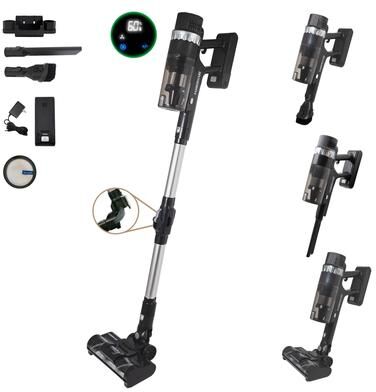
Farberware Cordless Platinum Stick Vacuum Cleaner, Smart Sensor Technology for Carpet and Hard Floors, Bendable DesignFarberware Cordless Platinum Stick Vacuum Cleaner, Smart Sensor Technology for Carpet and Hard Floors, Bendable Design, Converts to Handheld Vacuum Description: Life is messy, but with Farberware’s Cordless Platinum Stick Vacuum, you can tackle every…146,99 $*Shipping: 0,00 $Secure redirect to the provider
-
What is the Pumping Lemma for regular languages?
The Pumping Lemma for regular languages is a fundamental result in theoretical computer science that provides a necessary condition for a language to be regular. It states that for any regular language L, there exists a constant p (the pumping length) such that any string s in L of length at least p can be split into three substrings, s = xyz, satisfying three conditions: 1) |xy| ≤ p, 2) |y| > 0, and 3) for all i ≥ 0, the string xy^iz is also in L. This lemma is often used to prove that certain languages are not regular by showing that they do not satisfy the conditions of the Pumping Lemma. **
-
What does the Pumping Lemma state for regular languages?
The Pumping Lemma for regular languages states that for any regular language L, there exists a pumping length p such that any string s in L with length at least p can be divided into three parts, u, v, and w, such that s = uvw, satisfying three conditions: 1) |uv| ≤ p, 2) |v| > 0, and 3) for all i ≥ 0, the string uv^iw is also in L. This lemma is used to prove that certain languages are not regular by showing that they do not satisfy the conditions of the Pumping Lemma. **
-
How does the pumping lemma for regular languages work?
The pumping lemma for regular languages states that for any regular language L, there exists a constant p such that any string s in L with length at least p can be divided into three parts, s = xyz, satisfying the following conditions: 1. |xy| ≤ p 2. |y| > 0 3. For all i ≥ 0, the string xy^iz is also in L. This lemma is used to prove that a language is not regular by assuming it is regular and then finding a string that violates the conditions of the pumping lemma. If no such string can be found, then the language may be regular. **
-
Why can't it be pumped with the pumping lemma?
The pumping lemma is a tool used to prove that a language is not regular. If a language cannot be pumped with the pumping lemma, it means that the language does not satisfy the conditions required for it to be regular. This could be due to the language having a non-regular structure or containing patterns that cannot be captured by a finite automaton. In other words, the language may have properties that cannot be replicated by the finite memory of a regular language. **
* All prices are inclusive of VAT and, if applicable, plus shipping costs. The offer information is based on the details provided by the respective shop and is updated through automated processes. Real-time updates do not occur, so deviations can occur in individual cases. ** Note: Parts of this content were created by AI.